China is one of those destinations that is starting to become trendy. It’s likely that, in the coming years, we’ll see a huge increase in the number of articles, videos, and posts talking about the country as an incredible destination worth visiting.
As I often say: whether you like China or not, it’s highly recommended to keep an eye on what’s happening on the other side of the world. Whether for geopolitical, economic, or other reasons, the fact is that we can no longer ignore a country that has everything it takes to occupy an increasingly central position in the global economy in the coming decades. It’s foolish to turn a blind eye out of sheer prejudice or ignorance.
Beyond the Most Well-Known Destinations
If you’re planning your first trip to China, cities like Beijing—to visit the Forbidden City; the modern and sprawling Shanghai; Guangzhou (Canton), with its famous Canton Fair; and Xi’an, with its Terracotta Warriors, should definitely be on your itinerary.
The destination that took me to the Village of Women with Long Hair was a region very popular with Chinese tourists, but still uncommon for first-time travelers to China: Guangxi Province, home to the cities of Guilin and Yangshuo. A stunningly beautiful region where you can take a cruise on the Li River and travel between the two cities.
We were in the capital, Beijing, and traveled to Guilin via high-speed train. We covered 2,100 km in just eight hours, at speeds of up to 300 km/h. It’s impossible not to think that our beloved Brazil could have a rail network with even minimal coverage. Imagine traveling from São Paulo to Salvador in roughly the same amount of time?
After exploring the hot and bustling city of Guilin, we visited the rice terrace region—more specifically, the tiny, charming village of Huangluo. It’s a very touristy outing, usually done in a single day—a day trip that we avoided, since we wanted to stay longer to better understand that region, its people, and its cultural traditions, which interested us so much.
A museum dedicated to women’s hair
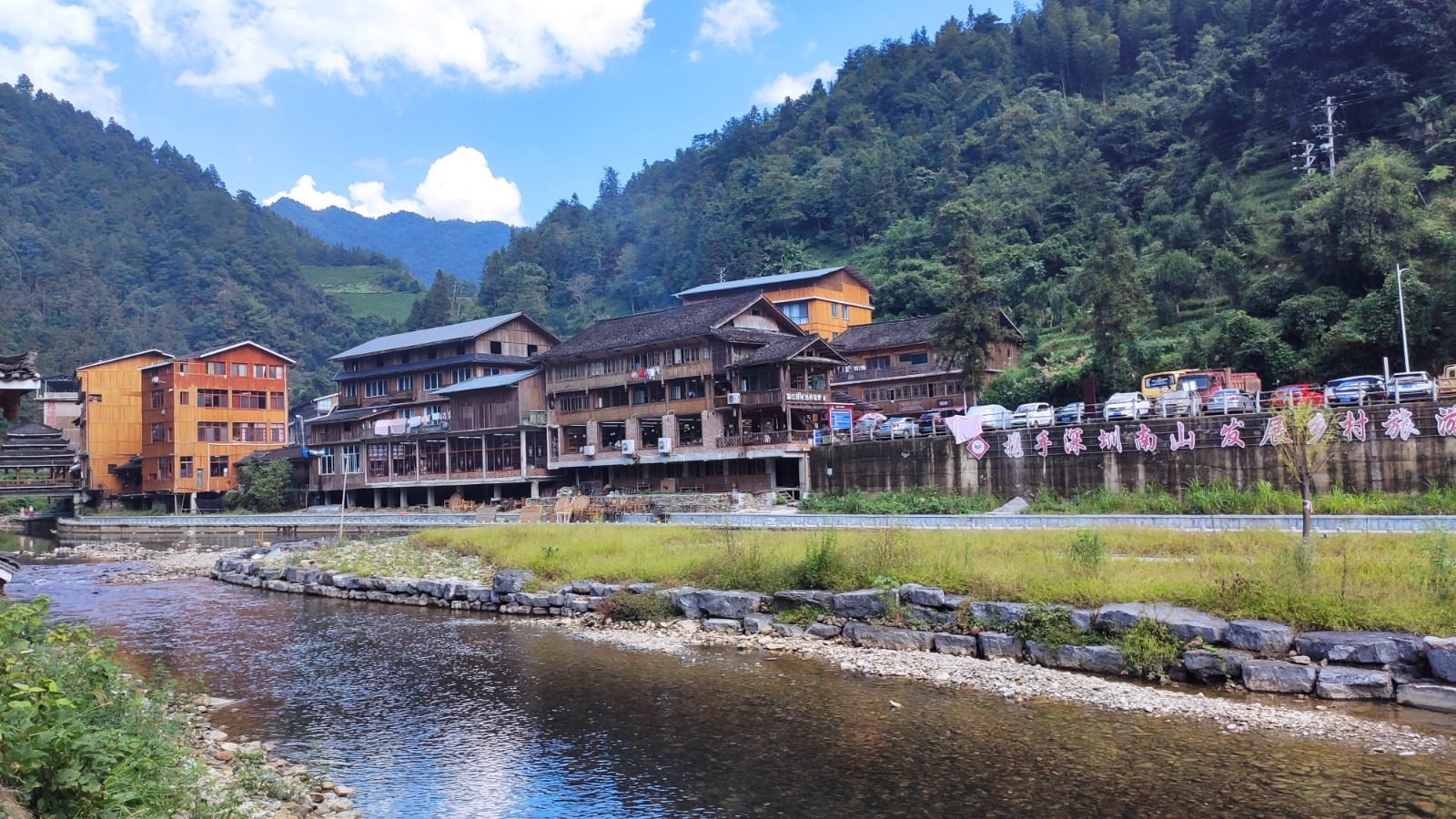
From Guilin, after traveling about 90 km by van for roughly two hours, we arrived at the Yao Village of Huangluo (黄洛瑶寨), a hamlet of traditional stilt houses nestled among the lush mountains and rice paddies of Longji.
The region is predominantly inhabited by the Zhuang ethnic group, which is also culturally rich, but our focus was on an even smaller group: the Red Yao women—so named for their clothing.
They are described as “the most faithful heirs to the Chinese tradition of long hair.” And for good reason: their hair averages over 1.6 meters in length, and the longest ever recorded in the village reached 2.3 meters. It is common to find women in their 70s or 80s with hair that is still very dark and almost no gray strands.
In 2002, the village was certified by Guinness World Records as the “Village with the World’s Longest-Haired Women.” In addition, Red Yao hairstyles and clothing have been listed as Intangible Cultural Heritage at the autonomous region level.
Our first stop was to visit the China Long Hair Science and Technology Museum, which spans 10,000 square meters and has been in operation since 2019 to help preserve the culture of long-haired women and their wisdom regarding hair care.
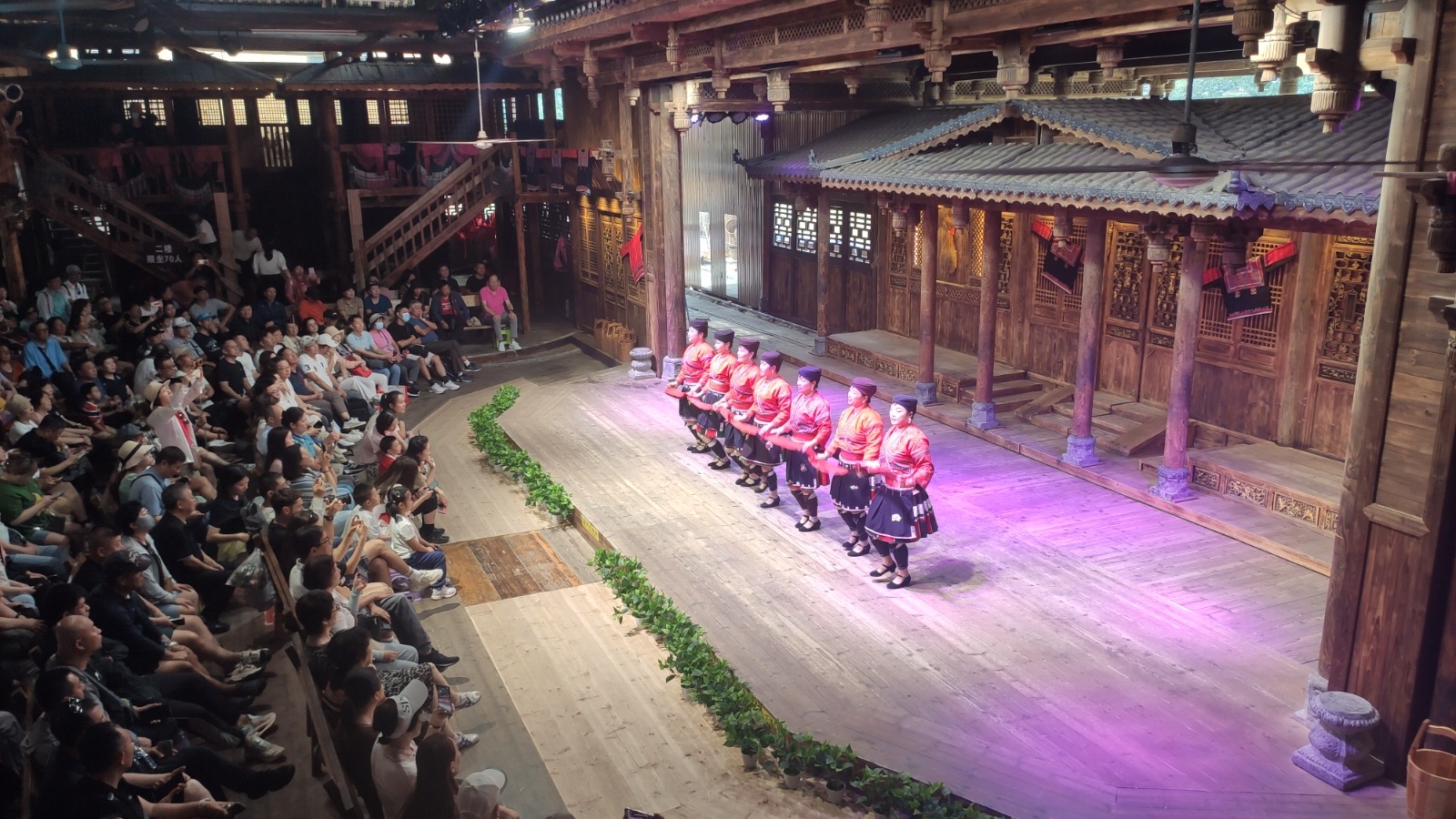
The museum is not just a preservation site—it is also a major economic driver for the village—generating jobs and income for the approximately 400 people who live there, without requiring them to abandon their traditions. The museum integrates cultural outreach, product manufacturing, and a well-structured entertainment-based tourism program, in addition to developing products focused on scalp care and health.
Details of our trip and the interviews can be seen in the documentary premiering on September 19, titled Vila das Mulheres de Cabelos Longos, at DeRose Method Brooklin in São Paulo. To attend, please call 11 94716-1889.
Women as Guardians of Culture
Throughout my travels through different cultures, I often encounter a similar scene: men dressed in casual clothes, while it is the women who maintain, preserve, and fight for the continuity of that tradition. In Huangluo, it was no different, and we had the privilege of interviewing two women from the Red Yao ethnic group: Pan Gui’en and businesswoman Pan Hong Mei, owner of a beautiful restaurant in the village.
The reason why so many people in this village have the surname Pan is simple: Huangluo is, for the most part, made up of members of a single family clan that bravely resists to preserve its culture. But the story runs deeper: the surname Pan traces back to the mythical hero Pan Hu, a dragon-dog who, according to tradition, was the progenitor of the Yao people. More than just a name, it is a link to their own mythology.
Red Yao women have a custom of cutting their hair only once in their lifetime. Their long hair is treated with rice water, keeping it healthy and shiny. And as if the length weren’t enough, the way they style their hair also reveals a woman’s marital status and stage of life: single women hide their bun under a turban, in a hairstyle called “Beauty in Modesty”; married women without children wear a “Spiral”; and mothers proudly display the “Black Dragon Hairstyle,” a symbol of prosperity and offspring.
Behind all this tradition lies an industry as well. Researchers and companies have approached the museum to try to unravel the mysteries of the Yao women’s hair and turn some of that knowledge into products. And, of course, at the museum you can purchase—for a hefty sum in yuan—your very own shampoo from the women of Long Hair Village.
In fact, I’m going to open mine, since a few gray hairs are stubbornly making an appearance.
An Example to Follow
Beyond being a beautiful expression of culture, the Village of Long-Haired Women is a masterclass in well-executed entrepreneurship and tourism—one of China’s hidden gems. There, women who are guardians of their culture come together, run their own businesses, and bring dignity and sustainable development to their villages and families. An example to follow.
May our Brazil be inspired to give a voice to minority groups and, in doing so, foster research into and appreciation of ancestral knowledge scattered throughout our country, which is just as vast as China.
Let’s pack our bags to see, hear, and learn from what’s different!
If you’d like to learn more, be sure to watch the documentary Vila das Mulheres dos Cabelos Longos, which is now available on YouTube:
More information about matriarcalismo at /a/brooklin/blog/en/tags/50.
More information about matr at /a/brooklin/blog/en/tags/3474.
More information about turismo at /a/brooklin/blog/en/tags/3475.
From now on, you’re part of a school that goes far beyond practical and theoretical classes. Here you’ll find in-person and online activities, relaxed moments with classmates, good food, new friendships, and a variety of learning opportunities.
Our goal is to provide an environment where you can practice with excellence, learn, socialize, and celebrate.
Throughout your journey, you’ll discover that the DeRose Method is also expressed through our interactions, culture, travels, cuisine, conversations, and the experiences we share.
And whenever you need us, you can count on us.
What is the DeRose Method?
The DeRose Method is a personal development methodology that brings together techniques and concepts with ancestral roots, organized into two main areas:
Technical Pillar
A set of techniques aimed at developing and enhancing the practitioner’s abilities, including:
breathing re-education;
physical techniques to increase strength, muscle tone, and flexibility;
vocalization of sounds and mantras;
organic purification techniques;
muscle and nervous system relaxation;
concentration;
meditation.
Important information and facts you need to know about our school
Established over 20 years ago, our school has been located in the Brooklin neighborhood of São Paulo since 2002. Thousands of students have passed through our doors, making the “orange house” a landmark in the region.
Address: Our own facility at Rua Michigan, 167, ZIP Code 04566-000
Landmarks: 50 meters from the Campo Belo subway station, which connects to the monorail leading to Congonhas Airport; near Santo Amaro and Portugal avenues. Also near the Saint Marchè supermarket;
Social media: website derosebrooklin.derosemethod.org and Instagram @derosebrooklin
Philosophical and Behavioral Foundation
A set of concepts that underpin the practice and guide a specific worldview, with reflections and guidelines related to:
daily habits and attitudes;
ethics;
healthy interpersonal relationships;
healthy eating;
stress management;
self-knowledge and personal growth.
The two pillars go hand in hand: the technique provides the practical experience, while knowledge helps to understand and expand that experience.
About Our Professionals
Every professional at Rede DeRose has specific training and undergoes evaluation and recertification processes conducted by the DeRose Method Federations in their respective states and countries.
At DeRose Method Brooklin, you can currently count on:
Professor André Mafra -- Director\ Plácido Salles -- Instructor\ Ivani Tavares -- Instructor\ Cláudia Busto -- Instructor\ Adriana Fonseca -- Instructor\ Anna Carol -- Instructor\ Alexandre Tutida -- Instructor\ Nery Neto -- Instructor
Don’t hesitate to reach out to any of our staff members if you have a question, suggestion, or need help. You can talk to us in person, by phone, or through our online channels.
Our Class Schedule
There are different types of classes at the school. Gradually, you’ll get to know each one and discover which ones make the most sense for your current level of practice.
Introductory Training
This is your gateway to the practice.
A practical class designed for beginners, covering breathing techniques, purification, body mobility, strength, flexibility, relaxation, and meditation.
The goal is to provide a gradual introduction to the techniques and prepare the practitioner for more comprehensive training.
The Initial Training phase typically lasts 1 to 3 months, depending on each student’s progress and adaptation.
Talk to your instructor to find out when and how to move on to the next stage.
Comprehensive Training
This is the most comprehensive and traditional form of DeRose Method practice.
The class generally follows the structure of ashtánga sádhana, which consists of eight parts:
calming;
energy return;
vocalization;
breathing exercises;
organic purification;
body movement;
relaxation;
meditation.
Admission to the Complete Training program is subject to an admission test.
When you feel you are ready, speak with your instructor to learn about the criteria for advancing to the next level and gaining access to the more comprehensive classes.
Basic Course Program
These are theoretical classes in a workshop format, based on the content of the book The Basic Course Program. We typically hold about three sessions per month, in addition to supplementary material.
It’s an excellent opportunity to gain a deeper understanding of the concepts, history, philosophy, and fundamentals that underpin the DeRose Method.
No additional cost for regular students.
Mindfulness Design
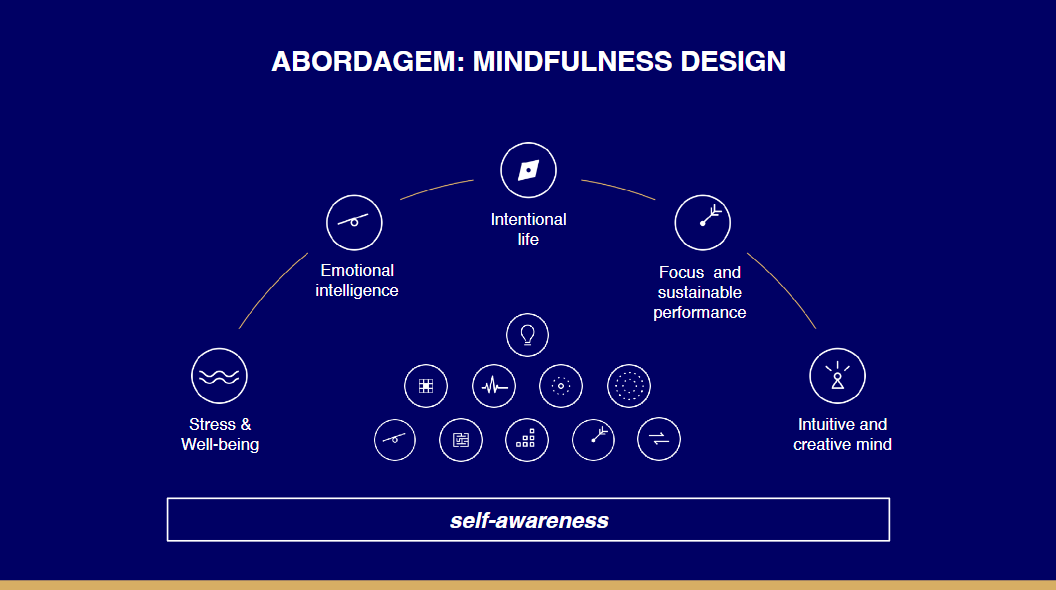
In certain months, Mindfulness Design takes place during the time slot normally reserved for the Basic Course Program. It is delivered through workshops and mentoring sessions, using language specifically tailored to the corporate and professional worlds. The Mindfulness Design workshops are an excellent way for you to bring our methodology to your company. If you’d like to implement it at your company or school, please speak with our Director.
No additional cost for regular students.
Strength and Flexibility Training
A class focusing on movement, body mobility, strength, and flexibility.
It is especially beneficial for those who wish to develop their physical abilities and improve their performance, including for high-performance activities.
No additional cost for regular students.
Private Lessons --- Personal Training
These are individual practical or theoretical classes in which the student has an instructor dedicated exclusively to them.
They can be used to:
clarify questions;
delve deeper into specific topics;
refine techniques;
address specific needs;
accelerate development in certain aspects of practice.
Talk to your instructor to learn more.
Activity not included in the regular plan.
Mental Training Group --- Sat Chakra
Sat Chakra is one of the most important activities in our school’s cultural life.
It is a gathering designed to train the ability to visualize and create more favorable conditions for achieving goals.
At the same time, it is an activity for socializing and celebration.
It usually takes place on the third Wednesday of the month, but always check the activity calendar to confirm the date.
This activity is free of charge for regular students.
Courses and Festivals
The courses at DeRose Method Brooklin will explore the pillars of the Practices—covering topics such as breathing, meditation, mobility, movement, strength, flexibility, and more—as well as the Concepts, including emotional relationships, changing habits, nutrition, resilience, and others.
The DeRose Festival, on the other hand, is one of the jewels of our methodology; it is an international event that brings together hundreds of practitioners and teachers in a special location for a weekend intensive. Be sure to experience this as part of your journey with us. There are also smaller events that offer a more intimate experience—and one that’s just as fascinating.
Travel
Every year we organize trips to special destinations that we call Learning Journeys; and in recent years we’ve taken groups to India, China, Turkey, Morocco, Germany, Italy, Estonia, Panama, Mexico, and Ethiopia. Why not clear your schedule so we can explore this big, wide world together?
Far Beyond the Classroom
DeRose Method Brooklin places special value on cultural and social activities.
These are moments when we can learn and share experiences outside the traditional classroom setting, strengthening the bonds between participants.
Throughout the year, activities such as the following may take place:
book signings;
book and documentary premieres;
cultural performances and exhibitions;
travel stories and lectures;
photography exhibitions;
trips to the theater and movies;
book clubs;
discussions on various topics;
culinary gatherings;
social and celebratory activities.
These are opportunities to get to know your classmates better and to discover different interests and perspectives.
Join in. School happens during these moments, too.
For those participating online
Online practice is an excellent tool for maintaining consistency, regardless of distance or daily routine.
Almost all of our practical classes are streamed online. These are known as hybrid classes, with both in-person and online participants at the same time. We also have exclusively online activities, without any in-person participants.
Our online platform, Learn DeRose, features an extensive library with hundreds of classes and training sessions for you to practice at any time of the day, in various languages such as Portuguese, Spanish, French, Italian, and English.
In addition to practical classes, our school offers a variety of virtual activities, such as lectures, courses, workshops, gatherings, and meetings. Some of these even feature instructors and teachers from other schools in the DeRose Network, via the Learn DeRose platform: https://learn.derose.co.
Practical tips to enhance your online experience
Keep your camera on at all times so the instructor can better correct your practice;
If possible, use a fisheye lens or an effect that provides a wider view of your practice space;
Use a practice mat suitable for your practice, preferably one that isn’t too thin;
Choose a space that is safe, well-lit, and spacious enough for you to practice the poses more effectively.
How to Access Online Activities
Install the Zoom app to participate in live activities.
To access the school’s schedule and content, use the Learn DeRose platform: https://learn.derose.co
To activate your account, sign up using your email address as your login. And feel free to share suggestions and feedback. You can also propose topics and activity formats you’d like to see in our schedule.
If you attend in person
For those who attend in-person classes, a few simple steps can help make the experience more enjoyable for everyone.
Locker Room Lockers
For your safety and comfort, we recommend that you keep your belongings stored in the lockers while you’re at the school.
Sandals
To maintain hygiene in the practice rooms, please wear shoes while walking around the school. You can use the sandals available in the locker rooms, which are sanitized regularly, or bring your own. We also recommend sanitizing your feet before entering the practice room.
Chai
Chai is a traditional welcome drink in India, similar to our Brazilian coffee. It consists of black tea, whole milk, water, white sugar, cardamom, ginger, and cinnamon. It is a complimentary beverage offered to our students and visitors.
If you’d ever like to learn how to make it, talk to your instructor to schedule a private session just for you. You can also watch Professor DeRose prepare it himself on YouTube:
Personal Hygiene Items
We have some personal hygiene items available in the locker rooms.
In the practice rooms, there are also dispensers with hand sanitizer and other items. Use them whenever necessary. If you notice that an item is missing, please let us know—we’d be happy to add to our list of perks for our students.
Some tips for your journey
Punctuality
Try to arrive a few minutes before class starts. We know that São Paulo traffic isn’t always cooperative, but punctuality is a sign of respect for your classmates and the instructor.
To avoid disrupting the class flow, we’ve set a maximum tolerance of 15 minutes late. We, as instructors, will also make every effort to start classes on time; if your class is delayed, please notify the Director of the School.
The Instructor Has Absolute Authority in the Classroom
Our professionals are trained to expertly lead the activities offered at the studio; the guidance, corrections, and adjustments provided by the instructor must be followed by those who have chosen to be students. This ensures that your progress will be rapid, safe, and easily assimilated. All of this is done with great attention, affection, and care.
Student Group on WhatsApp
To facilitate communication and promote integration, you will be added to our student group. There, you can stay updated on information about activities, meetings, and school events. The group brings together students, alumni, teachers, instructors, and the school’s director.
We want to build a pleasant and healthy digital environment for everyone. Therefore, we ask that you avoid discussions and topics that could lead to conflicts or disagreements. The group is not intended for debates about politics, religion, soccer, or other topics that could easily turn our interactions into disputes.
The idea is for WhatsApp to be an extension of the environment we want to build at school: informative, lighthearted, respectful, and pleasant.
How to Stay Updated on What’s Happening at School
In addition to the WhatsApp groups, we have other channels for you to stay updated on our schedule.
Bulletin Boards and Whiteboards
There’s always information and announcements posted around the school. Be sure to check them regularly!
Activity Schedule and Weekly Email
At the beginning of each month, we post our schedule in the announcement groups.
Keep an eye on the calendar and take the opportunity to participate in the various extracurricular activities suggested by the instructors and the school. Many of the most interesting experiences happen precisely outside of regular class hours.
Every week—usually on Mondays—we send an email listing upcoming activities. Keep your contact information up to date and check to make sure the email hasn’t ended up in your spam folder.
One last thing...
Don’t rush to experience everything.
You’re joining a school with a wide variety of practices, concepts, people, and activities. Little by little, you’ll discover what interests you most and find your own path within this program.
Ask questions. Participate. Try things out. Get involved.
And whenever you need help, reach out to your instructor or contact us directly.
A very warm welcome to DeRose Method Brooklin!
Contacts
Professor André Mafra --- Director - \@prof_andremafra\
11 99634-9326
 Andre Mafra