 Andre Mafra
China and the Village of Long-Haired Women
China is one of those destinations that is starting to become trendy. It’s likely that, in the coming years, we’ll see a huge increase in the number of articles, videos, and posts talking about the country as an incredible destination worth visiting.
As I often say: whether you like China or not, it’s highly recommended to keep an eye on what’s happening on the other side of the world. Whether for geopolitical, economic, or other reasons, the fact is that we can no longer ignore a country that has everything it takes to occupy an increasingly central position in the global economy in the coming decades. It’s foolish to turn a blind eye out of sheer prejudice or ignorance.

Beyond the Most Well-Known Destinations
If you’re planning your first trip to China, cities like Beijing—to visit the Forbidden City; the modern and sprawling Shanghai; Guangzhou (Canton), with its famous Canton Fair; and Xi’an, with its Terracotta Warriors, should definitely be on your itinerary.
The destination that took me to the Village of Women with Long Hair was a region very popular with Chinese tourists, but still uncommon for first-time travelers to China: Guangxi Province, home to the cities of Guilin and Yangshuo. A stunningly beautiful region where you can take a cruise on the Li River and travel between the two cities.

We were in the capital, Beijing, and traveled to Guilin via high-speed train. We covered 2,100 km in just eight hours, at speeds of up to 300 km/h. It’s impossible not to think that our beloved Brazil could have a rail network with even minimal coverage. Imagine traveling from São Paulo to Salvador in roughly the same amount of time?
After exploring the hot and bustling city of Guilin, we visited the rice terrace region—more specifically, the tiny, charming village of Huangluo. It’s a very touristy outing, usually done in a single day—a day trip that we avoided, since we wanted to stay longer to better understand that region, its people, and its cultural traditions, which interested us so much.
A museum dedicated to women’s hair
From Guilin, after traveling about 90 km by van for roughly two hours, we arrived at the Yao Village of Huangluo (黄洛瑶寨), a hamlet of traditional stilt houses nestled among the lush mountains and rice paddies of Longji.
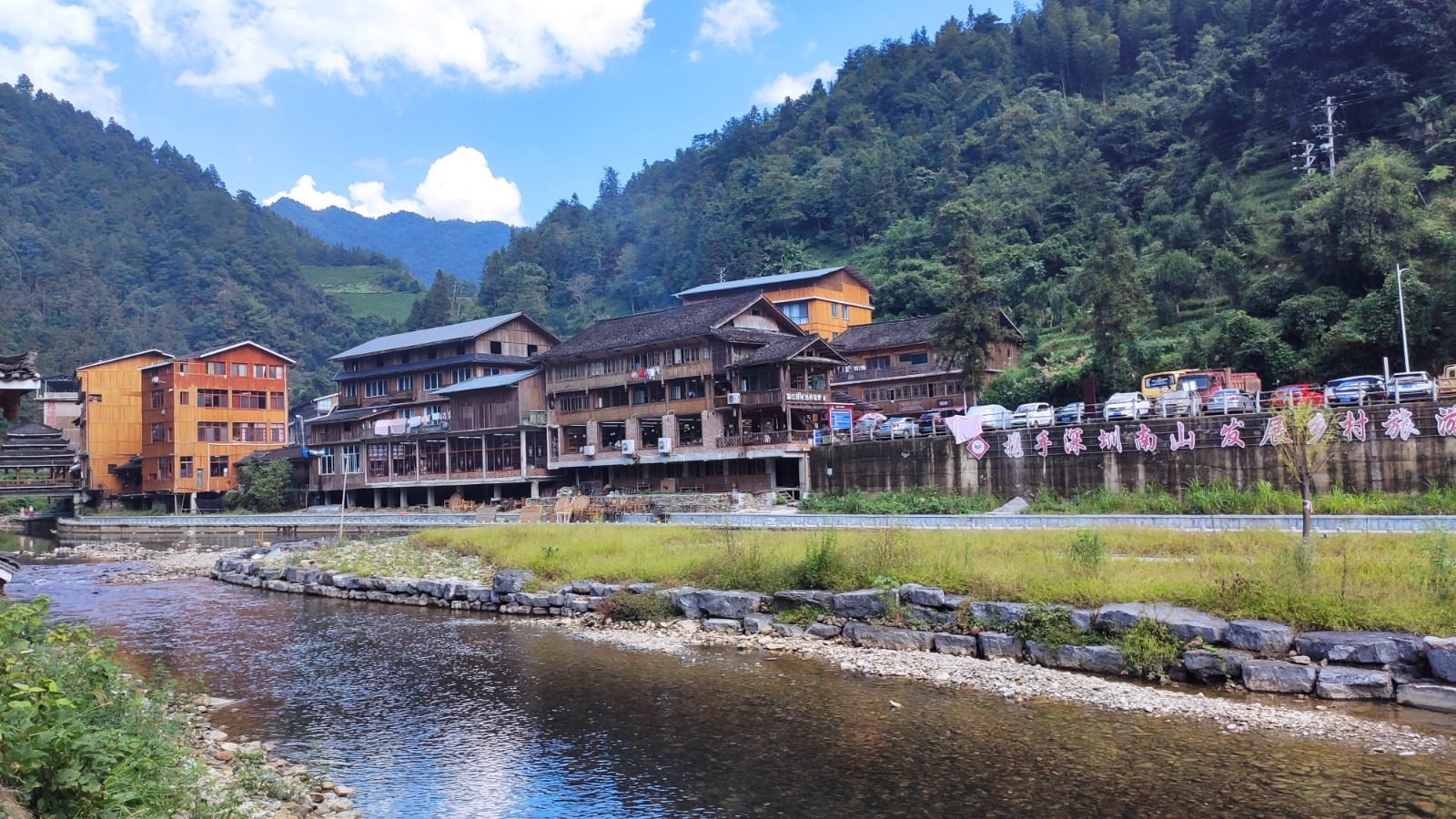
The region is predominantly inhabited by the Zhuang ethnic group, which is also culturally rich, but our focus was on an even smaller group: the Red Yao women—so named for their clothing.
They are described as “the most faithful heirs to the Chinese tradition of long hair.” And for good reason: their hair averages over 1.6 meters in length, and the longest ever recorded in the village reached 2.3 meters. It is common to find women in their 70s or 80s with hair that is still very dark and almost no gray strands.
In 2002, the village was certified by Guinness World Records as the “Village with the World’s Longest-Haired Women.” In addition, Red Yao hairstyles and clothing have been listed as Intangible Cultural Heritage at the autonomous region level.
Our first stop was to visit the China Long Hair Science and Technology Museum, which spans 10,000 square meters and has been in operation since 2019 to help preserve the culture of long-haired women and their wisdom regarding hair care.
The museum is not just a preservation site—it is also a major economic driver for the village—generating jobs and income for the approximately 400 people who live there, without requiring them to abandon their traditions. The museum integrates cultural outreach, product manufacturing, and a well-structured entertainment-based tourism program, in addition to developing products focused on scalp care and health.
Details of our trip and the interviews can be seen in the documentary premiering on September 19, titled Vila das Mulheres de Cabelos Longos, at DeRose Method Brooklin in São Paulo. To attend, please call 11 94716-1889.
Women as Guardians of Culture
Throughout my travels through different cultures, I often encounter a similar scene: men dressed in casual clothes, while it is the women who maintain, preserve, and fight for the continuity of that tradition. In Huangluo, it was no different, and we had the privilege of interviewing two women from the Red Yao ethnic group: Pan Gui’en and businesswoman Pan Hong Mei, owner of a beautiful restaurant in the village.
The reason why so many people in this village have the surname Pan is simple: Huangluo is, for the most part, made up of members of a single family clan that bravely resists to preserve its culture. But the story runs deeper: the surname Pan traces back to the mythical hero Pan Hu, a dragon-dog who, according to tradition, was the progenitor of the Yao people. More than just a name, it is a link to their own mythology.
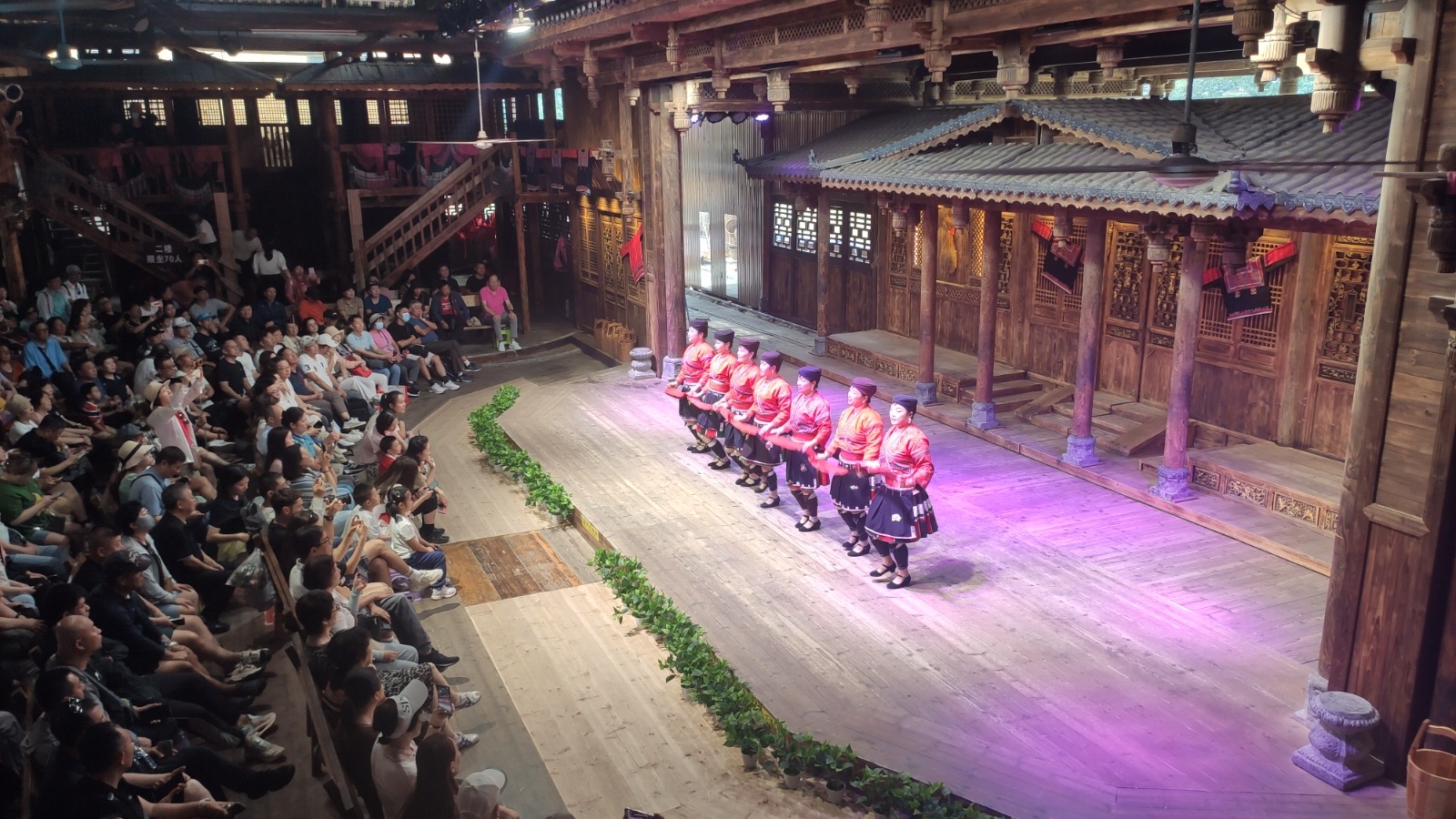
Red Yao women have a custom of cutting their hair only once in their lifetime. Their long hair is treated with rice water, keeping it healthy and shiny. And as if the length weren’t enough, the way they style their hair also reveals a woman’s marital status and stage of life: single women hide their bun under a turban, in a hairstyle called “Beauty in Modesty”; married women without children wear a “Spiral”; and mothers proudly display the “Black Dragon Hairstyle,” a symbol of prosperity and offspring.
Behind all this tradition lies an industry as well. Researchers and companies have approached the museum to try to unravel the mysteries of the Yao women’s hair and turn some of that knowledge into products. And, of course, at the museum you can purchase—for a hefty sum in yuan—your very own shampoo from the women of Long Hair Village.
In fact, I’m going to open mine, since a few gray hairs are stubbornly making an appearance.
An Example to Follow
Beyond being a beautiful expression of culture, the Village of Long-Haired Women is a masterclass in well-executed entrepreneurship and tourism—one of China’s hidden gems. There, women who are guardians of their culture come together, run their own businesses, and bring dignity and sustainable development to their villages and families. An example to follow.
May our Brazil be inspired to give a voice to minority groups and, in doing so, foster research into and appreciation of ancestral knowledge scattered throughout our country, which is just as vast as China.
Let’s pack our bags to see, hear, and learn from what’s different!
If you’d like to learn more, be sure to watch the documentary Vila das Mulheres dos Cabelos Longos, which is now available on YouTube:
Join the conversation
Sign up | Log in